Jacinto surrounds himself with the latest conveniences in Paris, convinced that comfort and progress are the keys to happiness. A journey to his family's Portuguese estate challenges that certainty, as unfamiliar rural life gives him reasons to reconsider what makes a life satisfying.
Concrete country and city scenes mix ironic observation with descriptive and technical words.
After serving ten years in prison for a murder he says he did not commit, Lúcio recounts his friendship with the poet Ricardo de Loureiro and his fascination with Ricardo's wife, Marta. Set between Paris and Lisbon, his confession blurs desire, jealousy and the boundary between imagination and reality.
This collection of Grimm fairy tales follows wandering soldiers, unlikely heroes and ordinary workers into a world of magical bargains and unexpected rewards. Stories such as Bearskin and The Elves and the Shoemaker combine adventure, mischief and tests of kindness, courage and good sense.
Familiar fairy-tale events help orientation, but the edition retains older spelling and uncommon words.
A journey from Lisbon to Santarém becomes an occasion for reflections on Portuguese history, politics and the changing countryside. Along the way, the narrator weaves in the troubled romance of Carlos and Joaninha, linking private loyalties with the divisions left by civil war.
Narrative digressions, literary commentary, and archaic spelling demand advanced reading.
A wealthy man's will reveals a previously unknown daughter, Helena, and asks his family to welcome her into their home. Her charm gradually wins their affection, but questions about her past and an increasingly complicated bond with Estácio unsettle the household's ideas of duty, love and respectability.
Family dialogue mixes abstract motives, formal narration, and older expressions.
Teodorico pretends to share his wealthy aunt's piety while privately enjoying a much less devout life. Sent on a pilgrimage to the Holy Land, he sees a chance to secure her favor, but desire, deception and an ill-chosen souvenir complicate his carefully maintained performance.
Travel and domestic scenes use satire, vivid adjectives, and formal descriptive language.
A poorly paid Lisbon clerk is offered a startling bargain: ring a bell, cause a distant stranger's death and inherit his immense fortune. What seems like an effortless route to happiness becomes a restless search for relief from guilt, carrying him far beyond the comfortable life he imagined.
Concrete travel scenes alternate with moral irony and culturally specific vocabulary.
This collection of stories and satirical sketches explores ambition, vanity and the strange logic people use to justify themselves. From a doctor's expanding definition of madness in The Alienist to surprising experiments in identity and society, ordinary assumptions become the starting point for unsettling, often comic reversals.
Abstract reasoning, parody, and literary reference make these varied stories demanding.
These short stories uncover unexpected tensions beneath marriages, friendships, artistic dreams and everyday social rituals. A devil founding his own church, a musician seeking an elusive melody and people hiding their desires reveal Machado de Assis's wry interest in contradiction, self-deception and missed possibilities.
Abstract observations and literary references carry meaning beyond the clear surface events.
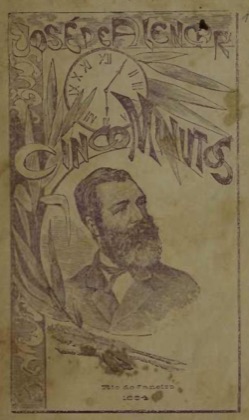
Missing an omnibus by five minutes leads a young man to an encounter with a mysterious woman whose face remains hidden. Captivated by her voice and fleeting presence, he sets out to find her, discovering that their chance meeting conceals a much more difficult story.
A compact narrative helps, but emotional imagery and older spelling add difficulty.
Guiomar, a young woman raised under a wealthy baroness's protection, finds herself courted by three very different men. As affection, family expectations and social ambition pull in competing directions, she considers which future will best suit her own clear-eyed understanding of happiness.
Social irony and indirect intentions require attention to figurative and idiomatic speech.
Gonçalo Ramires hopes a historical novel about his heroic ancestors will win him literary fame and a place in politics. As he writes, his everyday compromises clash with the courage of his fictional heroes, turning a family chronicle into a witty portrait of ambition and national pride.
Social irony and descriptive passages mix colloquial dialogue with historical vocabulary.
Sign in to add this title and keep your place.
Source and license
A level is a starting point.
These are approximate editorial reading guides, not certified CEFR assessments or a test of your proficiency. A classic’s range reflects this edition’s language; a short story’s label is its writing target. Familiarity with the subject and the help you use can change how a text feels.
You can read immediately once a title is in your Library. Translation, vocabulary checks, and chapter preparation are optional. Sign in to add a title and keep your place; account capacity and beta availability apply.