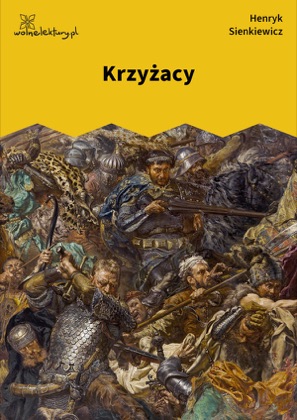
The young knight Zbyszko of Bogdaniec seeks glory and the love of Danusia as tensions rise between Poland and the Teutonic Order. Personal vows and family suffering draw him into a wider conflict where courtly ideals, revenge and political ambition lead toward war.
Concrete action helps, while medieval social terms and older expressions add difficulty.
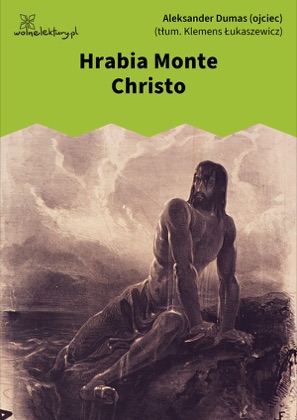
Betrayed by men he trusted, the young sailor Edmond Dantès is imprisoned just as a promising future seems within reach. Years later, a mysterious and wealthy count enters their lives, setting in motion an elaborate reckoning that tests the boundaries between justice, revenge and mercy.
Clear plot events mix formal narration, older social terms, and extended sentences.
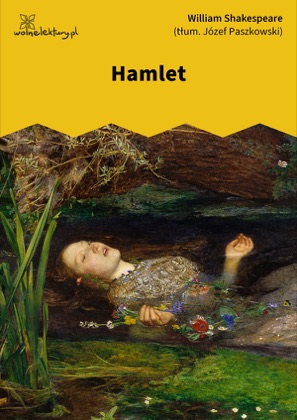
After his father's ghost accuses the new king of murder, Prince Hamlet struggles to decide how to uncover the truth and take revenge. Surveillance, staged performances and divided loyalties turn the Danish court into a dangerous place where uncertainty can be as destructive as action.
Archaic dramatic language, dense metaphors, and rhetorical speech require close reading.
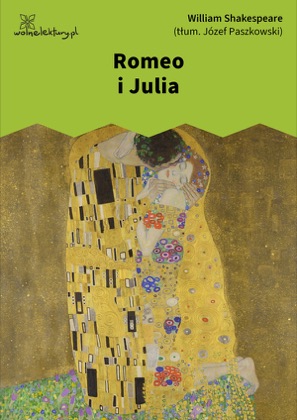
Romeo and Juliet fall in love despite the bitter feud between their families in Verona. Their attempts to build a future together depend on secrecy and fragile plans, while the violence around them threatens to turn a private romance into a conflict neither can control.
Archaic dialogue and playful or figurative speech make the translation demanding.
Kidnapped during an uprising in Sudan, young Staś and Nel are carried far from their families and the familiar world of Port Said. Their search for safety becomes a long journey through desert and wilderness, testing their courage as they face illness, dangerous animals and uncertain allies.
Concrete adventure scenes use vivid descriptions, geographical terms, and older phrasing.
Sara Crewe arrives at a London boarding school with a rich father's love and a gift for storytelling. When her circumstances change abruptly, she must draw on imagination and friendship to endure hardship while holding on to the generosity and dignity she believes a princess should possess.
Clear family and school scenes help, with older expressions and longer descriptive sentences.
Friendship and family · History · Arts and culture
A village wedding brings peasants and educated city guests together for a night of celebration, conversation and uneasy encounters. As figures from Poland's past appear among them, personal doubts and old divisions turn the festivities into a drama about national hopes and the difficulty of collective action.
Regional speech, symbolic scenes, and poetic phrasing demand interpretive reading.
Two stubborn neighbors sharing a castle turn a dispute over a wall into a campaign of threats, lawsuits and marriage schemes. Meanwhile, their young relatives are secretly in love, creating a lively comedy in which pride, bluster and misunderstandings repeatedly frustrate everyone's plans.
Verse inversion, older expressions, and comic rhetorical speech require close attention.
When a nobleman seeks a bride, two sisters compete for a chance to leave their poor household behind. Balladyna's ambition turns the rivalry into a struggle for status and power, while supernatural interference and mounting secrets make each new success more perilous than the last.
After witnessing revolution in Baku, Cezary Baryka travels to newly independent Poland with his father's vision of a better society in mind. The poverty and inequality he encounters challenge that dream, leaving him torn between personal desire, gradual reform and the promise of radical change.
Political argument and literary irony combine conceptual terms with older vocabulary.
After the Trojan War, Odysseus struggles to reach Ithaca through storms, monsters and encounters with powerful gods. While his wife Penelope and son Telemachus face unwelcome suitors at home, his long voyage tests ingenuity, loyalty and the strength of his desire to return.
Poetic inversion, archaic forms, and mythological references require contextual reading.
A quarrel between Achilles and Agamemnon divides the Greek army during the siege of Troy, with devastating consequences for soldiers on both sides. Gods and mortals share the battlefield in an epic poem about wounded pride, friendship, grief and the human cost of heroic glory.
Rhymed verse, inverted syntax, and ancient cultural terms require contextual support.
Sign in to add this title and keep your place.
Source and license
A level is a starting point.
These are approximate editorial reading guides, not certified CEFR assessments or a test of your proficiency. A classic’s range reflects this edition’s language; a short story’s label is its writing target. Familiarity with the subject and the help you use can change how a text feels.
You can read immediately once a title is in your Library. Translation, vocabulary checks, and chapter preparation are optional. Sign in to add a title and keep your place; account capacity and beta availability apply.