A young woman brings Sherlock Holmes a mystery involving her missing father, anonymous gifts, and an unexpected invitation. Holmes and Watson follow a trail through London that links a stolen treasure to old betrayals, a baffling death, and a dangerous pursuit.
Clear investigation scenes include formal descriptions and specialized observational vocabulary.
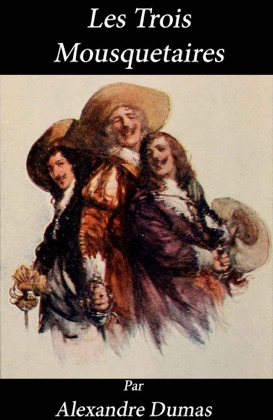
Young d'Artagnan arrives in Paris hoping to become a musketeer and finds friendship with Athos, Porthos, and Aramis. Their adventures draw them into duels, secret missions, and dangerous court intrigues, where loyalty matters as much as skill with a sword.
Clear action and dialogue help, while period expressions and complex motives need support.
Emma Bovary dreams of a life filled with the passion and luxury she has found in books. Disappointed by marriage to a provincial doctor, she pursues romance and expensive comforts, while the gap between her imagined life and reality becomes increasingly dangerous.
Subtle social irony and precise descriptive vocabulary make the literary prose demanding.
Professor Aronnax joins a search for a mysterious sea creature and discovers Captain Nemo's remarkable submarine, the Nautilus. Held aboard with two companions, he explores the wonders and dangers of the ocean while trying to understand their secretive captain and find a way home.
Nautical and biological terminology accompanies clear events and formal narration.
Phileas Fogg wagers that he can travel around the world in eighty days and sets out with his new servant Passepartout. Trains, ships, unexpected delays, and a pursuing detective turn their carefully timed itinerary into a race that leaves little room for mistakes.
Clear travel events mix formal narration with transport and period-specific vocabulary.
In medieval Paris, the young dancer Esmeralda draws the attention of men whose desires place her in increasing danger. Around the cathedral of Notre-Dame, Quasimodo, Claude Frollo, and others become caught in a story of obsession, compassion, prejudice, and the struggle for refuge.
Historical vocabulary, elaborate descriptions, and varied registers require advanced reading.
Raised to believe that everything happens for the best, Candide is driven from home and thrown into a world of war, disaster, and injustice. His search for the woman he loves becomes a sharp, often absurd journey that repeatedly tests the optimistic philosophy he was taught.
Compact events help orientation, while philosophical satire and historical allusions need context.
Cyrano is a brilliant poet and fearless swordsman who believes his appearance makes him unworthy of Roxane's love. When she falls for the handsome Christian, Cyrano lends him his words, creating a romance in which the voice and the face belong to different men.
Verse dialogue, verbal wit, and figurative emotional speech require close interpretation.
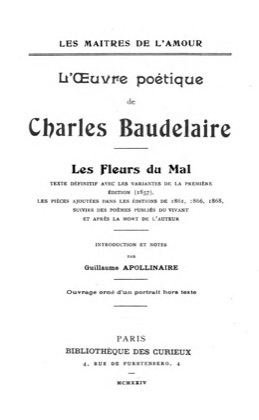
Baudelaire's poems explore desire, beauty, despair, and the uneasy pull between spiritual aspiration and everyday corruption. This 1857 collection moves through intimate longing, disturbing visions, and reflections on death, finding striking images in experiences that can be painful, forbidden, or unexpectedly beautiful.
Julien Sorel, an ambitious young man from a modest family, sees education and the Church as routes into a higher social world. His relationships with two women entangle love with pride and advancement, exposing the pressures and hypocrisy of society in post-Napoleonic France.
Psychological observation, social implications, and abstract narration demand close attention.
Seeking work, Étienne Lantier enters a mining community where exhausting labor and poverty shape every family's life. As anger over wages grows into a strike, solidarity, rival beliefs, and desperate hunger test the workers' hope that they can change their conditions.
Mining terminology, socially marked speech, and detailed emotional narration make the prose demanding.
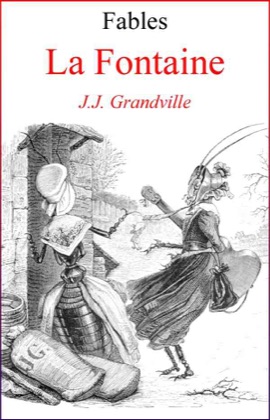
Foxes, wolves, lions, and people act out the follies and conflicts of human life in La Fontaine's verse fables. These short stories combine wit with moral reflection, showing how vanity, greed, cunning, and unequal power shape encounters between the strong and the vulnerable.
Older spelling, verse inversion, and allusive moral language make these fables demanding.
Sign in to add this title and keep your place.
Source and license
A level is a starting point.
These are approximate editorial reading guides, not certified CEFR assessments or a test of your proficiency. A classic’s range reflects this edition’s language; a short story’s label is its writing target. Familiarity with the subject and the help you use can change how a text feels.
You can read immediately once a title is in your Library. Translation, vocabulary checks, and chapter preparation are optional. Sign in to add a title and keep your place; account capacity and beta availability apply.