Gregor Samsa wakes one morning to find himself transformed into a monstrous creature, yet his first worries concern work and his family's needs. Confined to his room, he watches his relationships change as the household struggles with dependence, fear, shame, and its new burdens.
Concrete events alternate with long embedded clauses and psychological implications.
Max and Moritz play seven increasingly outrageous tricks on the unsuspecting people around them. Told in lively rhyming verse and pictures, their mischief turns everyday village life upside down, combining comic invention with the prospect of a severe reckoning for the two troublemakers.
Short rhymed scenes help orientation, but inversion, older forms, and comic implication add difficulty.
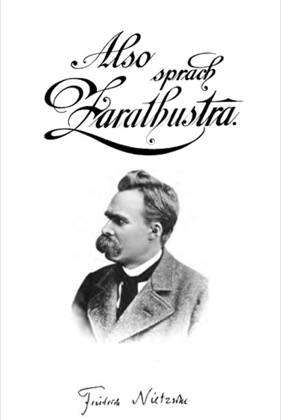
After years of solitude in the mountains, Zarathustra returns to people with teachings that challenge inherited values and comfortable beliefs. Told through speeches, parables, and symbolic encounters, Nietzsche's philosophical work explores self-transformation, the creation of meaning, and the difficulty of living beyond established certainties.
Philosophical argument, biblical-style rhetoric, and dense metaphor require interpretive reading.
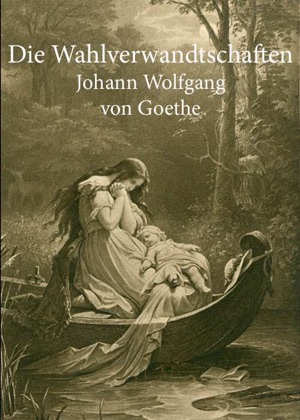
Eduard and Charlotte's quiet married life changes when they invite a friend and a young woman to stay at their country estate. New attractions unsettle the household, forcing all four to confront the conflict between desire, responsibility, and the bonds they believed were secure.
Indirect motives and abstract comparisons accompany layered literary sentences.
Schopenhauer considers what makes a life bearable and how people might protect their happiness from disappointment. His reflections examine health, character, wealth, reputation, and relationships, offering pointed observations about human behavior and the value of independence, self-knowledge, and a carefully managed daily life.
Abstract philosophical claims and extended argument require a broad conceptual vocabulary.
Marcus Aurelius records private reflections on duty, mortality, self-control, and life among other people. These brief Stoic meditations return to the challenge of meeting change and difficulty with a clear mind, treating others fairly, and directing attention toward what lies within one's power.
Abstract ethical reflection uses formal vocabulary and extended conditional reasoning.
Machiavelli examines how rulers gain power, hold territories, manage armies, and respond to threats. Drawing on historical examples, he considers the uneasy relationship between political success and moral conduct, asking what a prince must understand about fear, loyalty, reputation, and changing circumstances.
Historical and political argument uses formal vocabulary, allusions, and nested clauses.
Sent away by his hardworking father, a cheerful young man takes his violin and sets off to seek his fortune. His wandering brings him to grand houses, unfamiliar roads, and an alluring young woman, in a romantic adventure full of music, mistaken impressions, and unexpected turns.
Clear first-person events use literary phrasing, idioms, and extended subordinate clauses.
Severin persuades Wanda, the woman he adores, to become his commanding mistress and treat him as her servant. As they try to live out his fantasy, desire turns into an unsettling struggle over power, jealousy, and the distance between imagined love and lived experience.
Direct conversation helps, while psychological reflection and formal vocabulary add difficulty.
The monk Medardus drinks a forbidden elixir and leaves his monastery, entering a world of temptation, violence, and disturbing coincidences. As doubles and tangled family histories unsettle his sense of identity, he struggles to distinguish his own guilt from forces he cannot understand.
Long layered clauses, older vocabulary, and uncertain perceptions require sustained attention.
The hero Siegfried enters the world of the Burgundian court, where love and royal ambitions depend on dangerous promises and deception. His story becomes entangled with Kriemhild, Gunther, and Brünhild, setting powerful loyalties and rivalries on a course toward betrayal and revenge.
This edition is in historical Middle High German. C2 is only a rough difficulty marker; modern German proficiency alone is insufficient.
Facing financial trouble, innkeeper Abel Hradscheck and his wife see a visiting creditor as an obstacle to the life they want. A discovery beneath their pear tree suggests a dangerous plan, but suspicion and guilt prove harder to control than appearances in their village.
Low German dialogue, older orthography, and implied motives require regional-language support.
Sign in to add this title and keep your place.
Source and license
A level is a starting point.
These are approximate editorial reading guides, not certified CEFR assessments or a test of your proficiency. A classic’s range reflects this edition’s language; a short story’s label is its writing target. Familiarity with the subject and the help you use can change how a text feels.
You can read immediately once a title is in your Library. Translation, vocabulary checks, and chapter preparation are optional. Sign in to add a title and keep your place; account capacity and beta availability apply.